
Real numbers and real deliverables from profiles we manage.
Taken from the Google dashboards of profiles we manage. No estimates or projections.
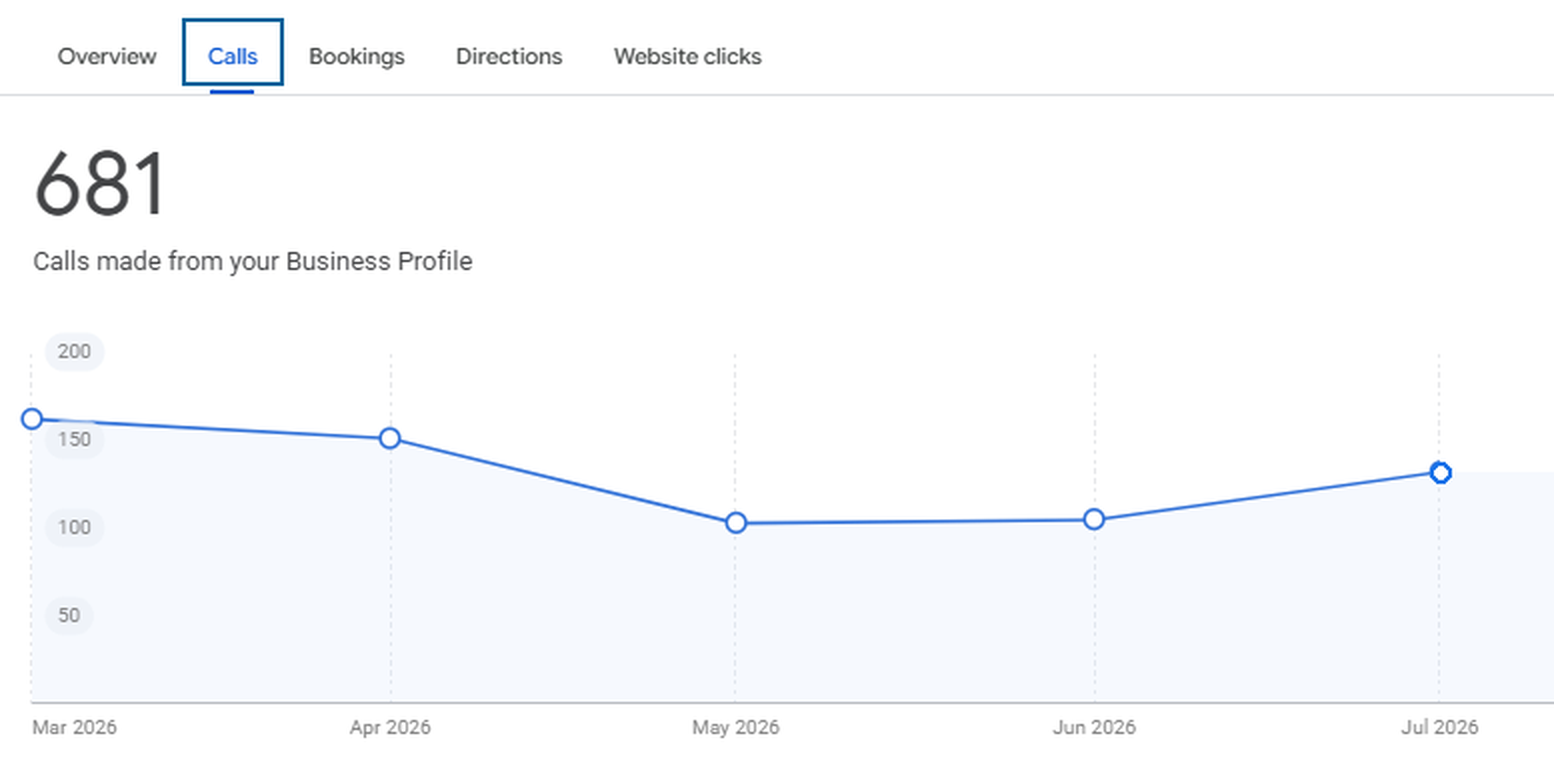
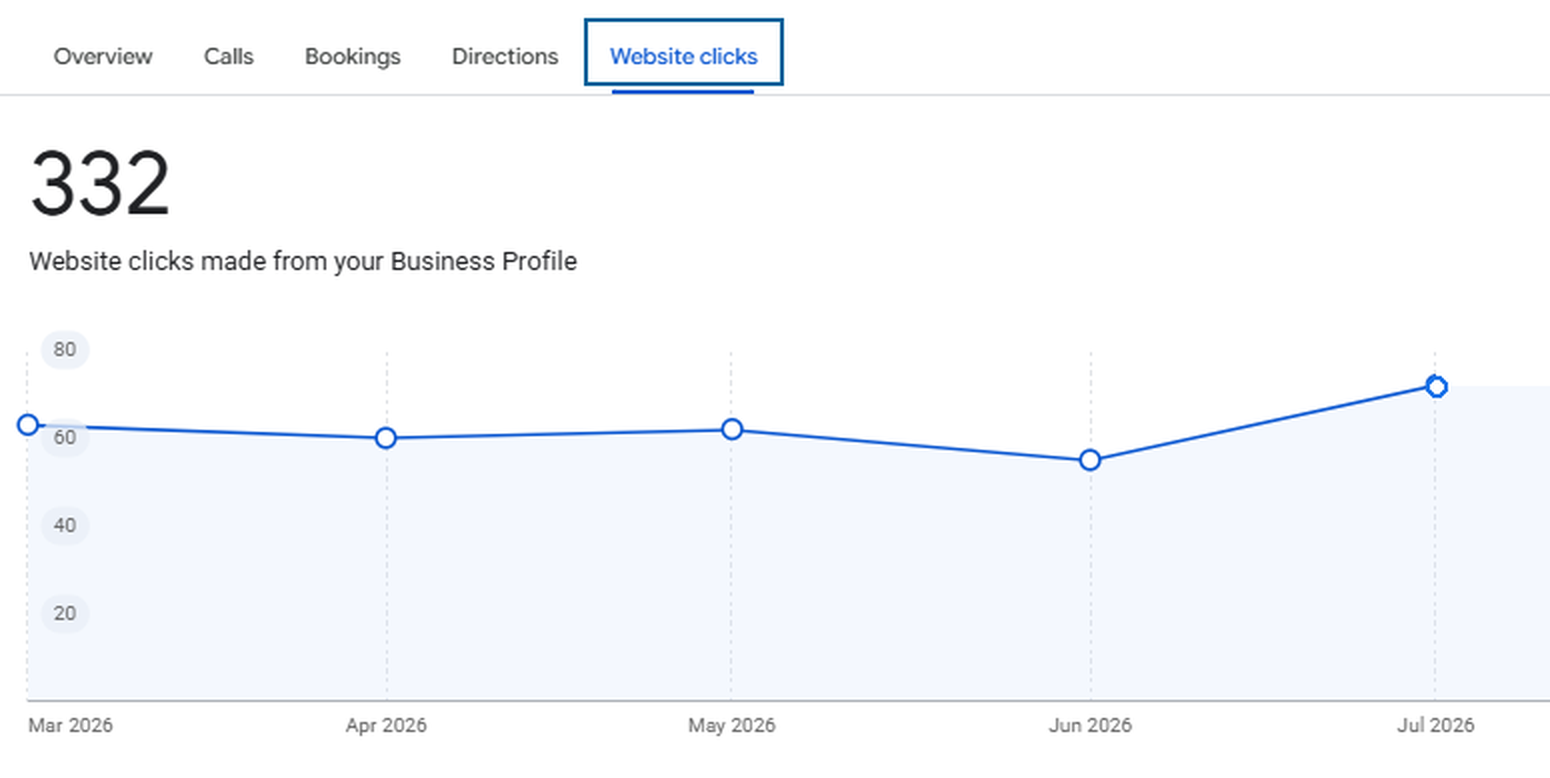
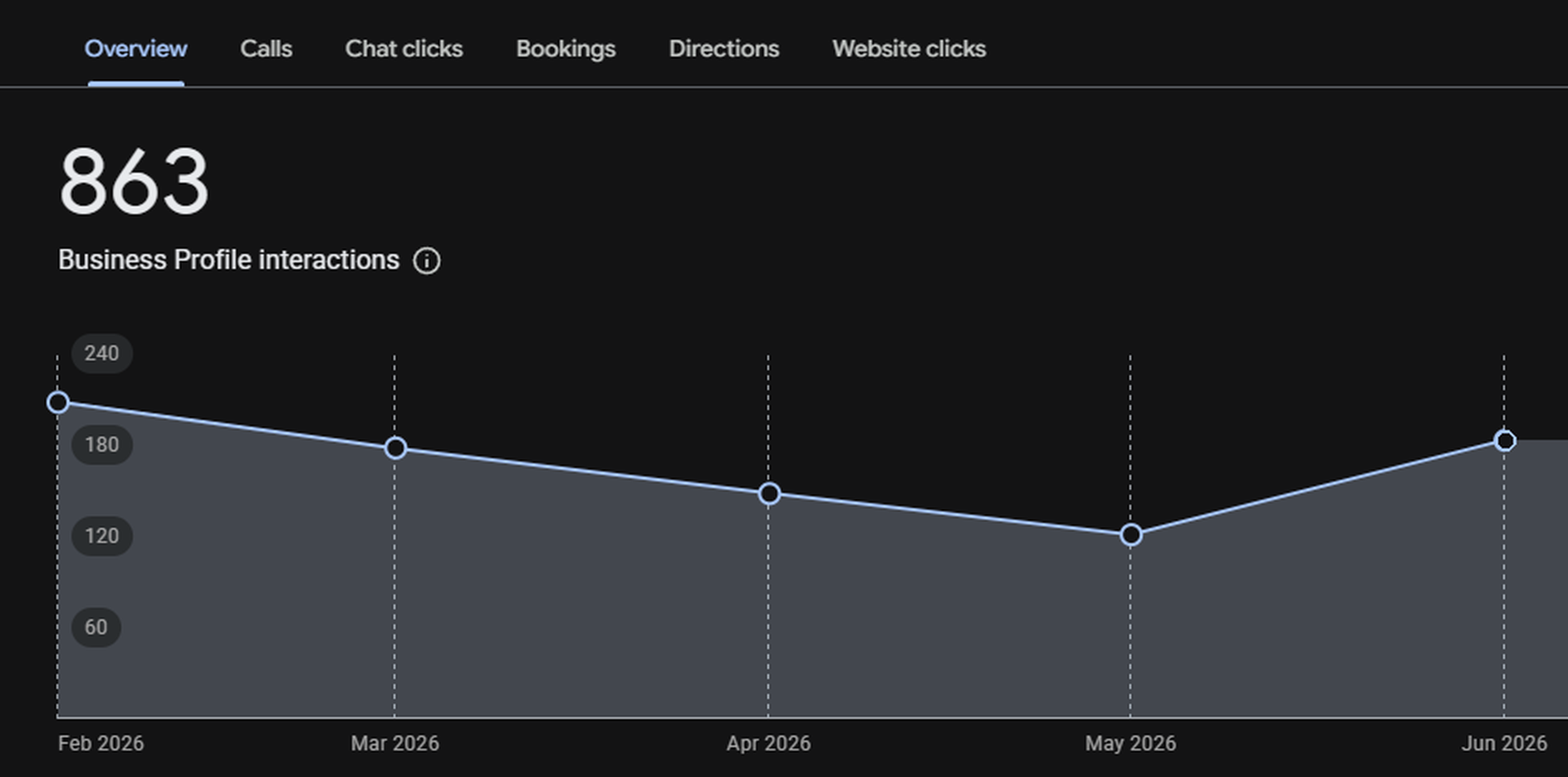
Charts run to the last complete month. The month a screenshot is taken is only part-finished, so plotting it beside full months would show a fall that has not happened.
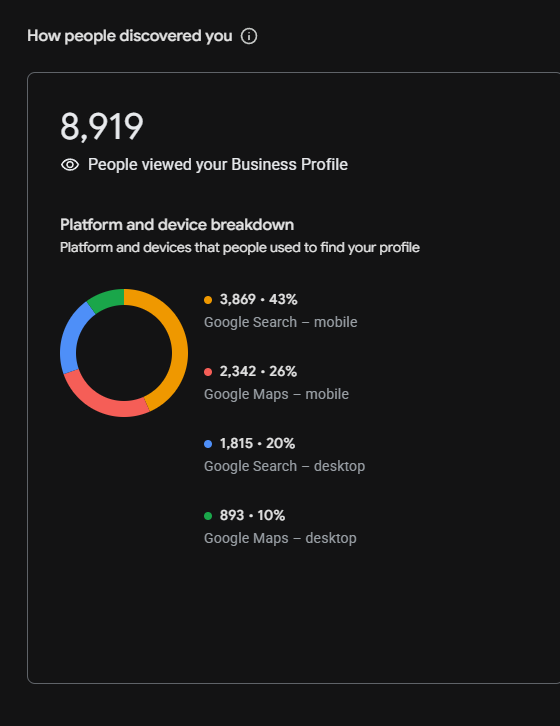
Google used to send people to your website. Now it answers for them.
When somebody asks about a repair or a shop, Google's AI writes the answer itself, from your Business Profile and your website. The customer may never reach your site at all. At the end of 2025 Google also retired the Questions and Answers section from Business Profiles, so the questions a person at your shop used to answer in public are now answered by Google's AI, reading whatever your profile says.
If your profile is thin on a subject, so is the answer a customer gets. A complete, accurate profile has stopped being a listing. It is the thing that gets read.
One shop's Products section was completely empty. We wrote sixteen cards and produced a photograph for each one. Three of them, exactly as they go up. Highlighted text is what makes the card work.
Engine repair in Seattle for European, Asian and domestic vehicles, from rough idling to loss of power. Unusual noises, difficulty starting, a drop in fuel efficiency or a sudden loss of power all point to engine trouble worth catching early. Our ASE-certified technicians diagnose the cause and show you the evidence with digital inspection photos and video. Backed by our 3-year/36,000-mile nationwide warranty.
Brake repair in Seattle, with a full inspection before any work is quoted. Grinding noises, a soft or spongy pedal, vibration while braking or longer stopping distances all need looking at quickly. We inspect pads, rotors, calipers and fluid, then show you exactly what we found. ASE-certified technicians, backed by our 3-year/36,000-mile nationwide warranty.
Advanced vehicle diagnostics in Seattle to find the real cause behind a warning light. Modern cars manage everything through computers and sensors, so a dashboard light is often your only clue and rarely the whole story. We read the systems properly, then show you what we found with photos and video before any work is agreed. ASE-certified technicians.
Each card also carries its category, its landing page on the shop's own site, and no price, because Google strips pricing from product copy.
This is what a customer sees on Google. Left is the profile as we found it. Right is the same profile rebuilt.
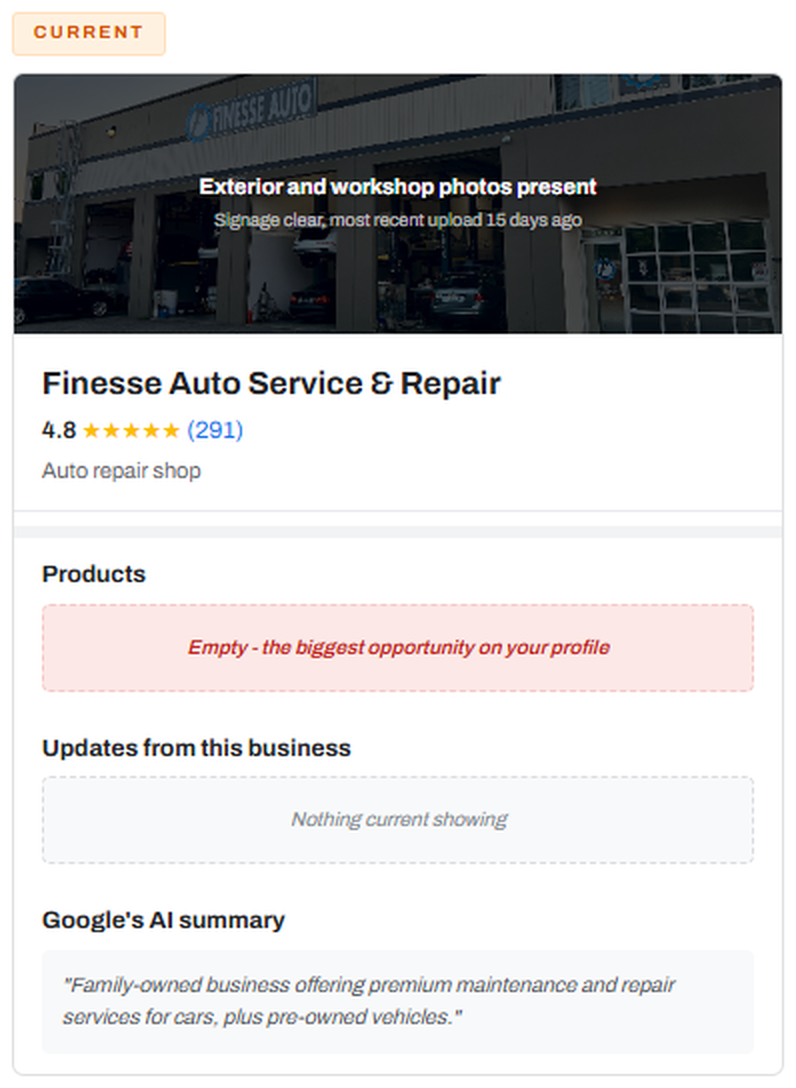
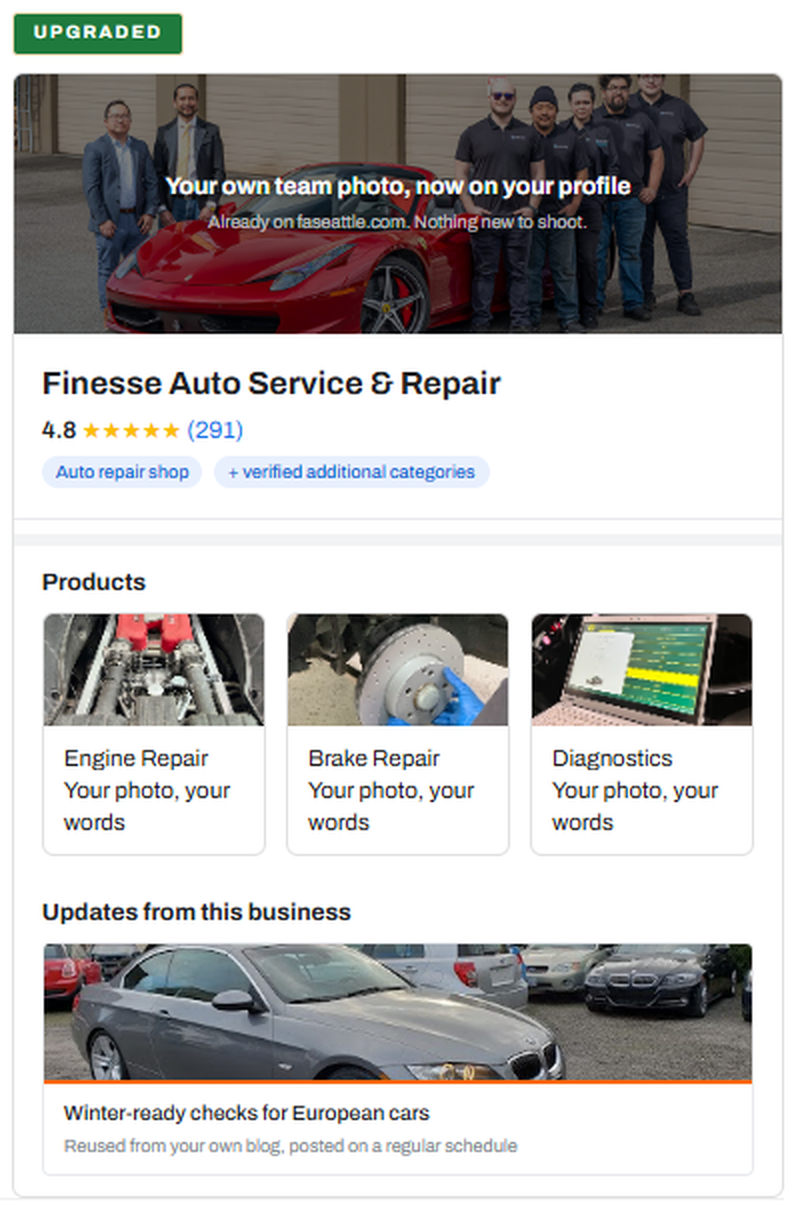
The most-read text on a profile, and the passage Google's AI leans on most when describing a shop. Both versions below are the real thing, taken straight from the audit.
Twelve years in one location is a trust signal the description was not using.
Reviewers call them "the shop in Georgetown". The description never said where they are.
Names the network behind the warranty, so it reads as backed rather than claimed.
They have pages for both and a Ferrari owner calls them his main shop. The strongest thing about them, and it was not mentioned.
Same job on a Portland shop, in the same layout. Both versions are the real text.
Every claim in it came off a specific page of their own website:
Four things were cut from our own first draft because the website did not back them up, including three diesel engine families and a shuttle service.
A rebuilt profile goes stale without activity. Every client gets five posts a month on their Google profile, designed in their own brand colours. We built our own application to run it, so the shop can see everything coming and reach us in one place instead of chasing an inbox.
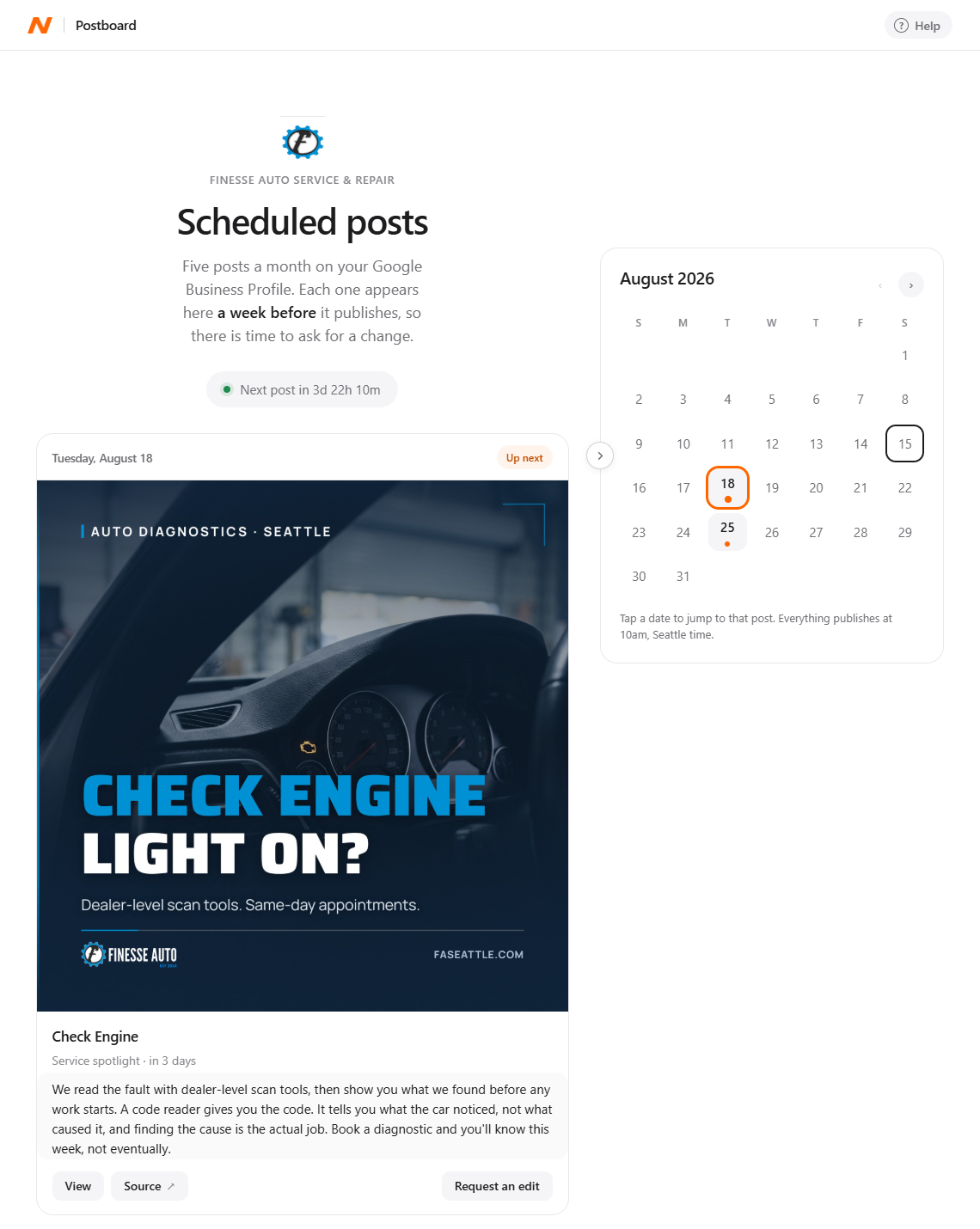
Posts publish on schedule whether or not anyone looks. If they want a change, they hit Request an edit. That post comes off the schedule while we revise. Everything behind it moves up a week, and the revision returns later.
They can see what is coming, ignore it entirely, or message us straight from the board. It never becomes another job in their inbox.
All five posts for one month, built in their brand colours with their logo and website address.

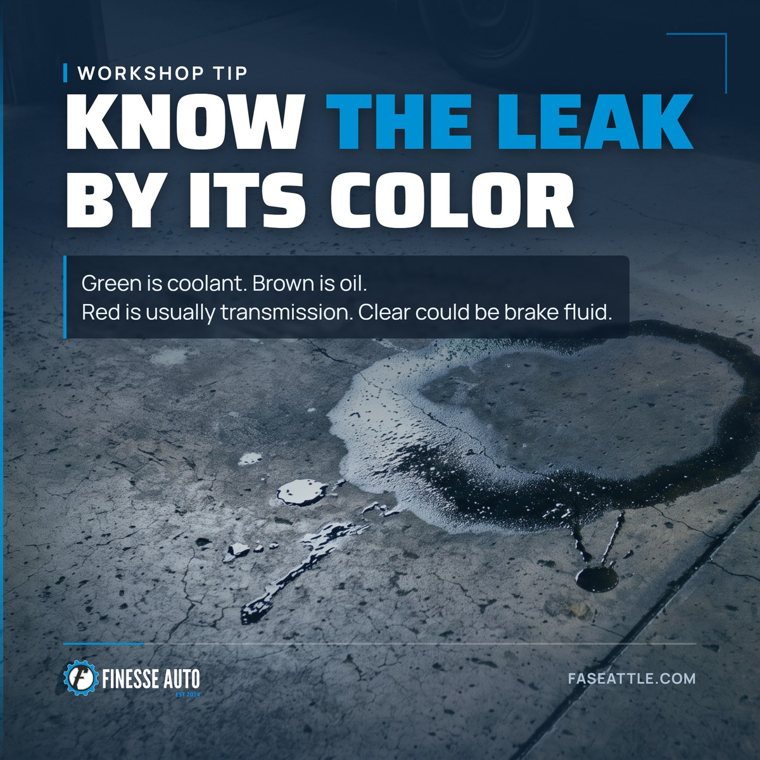
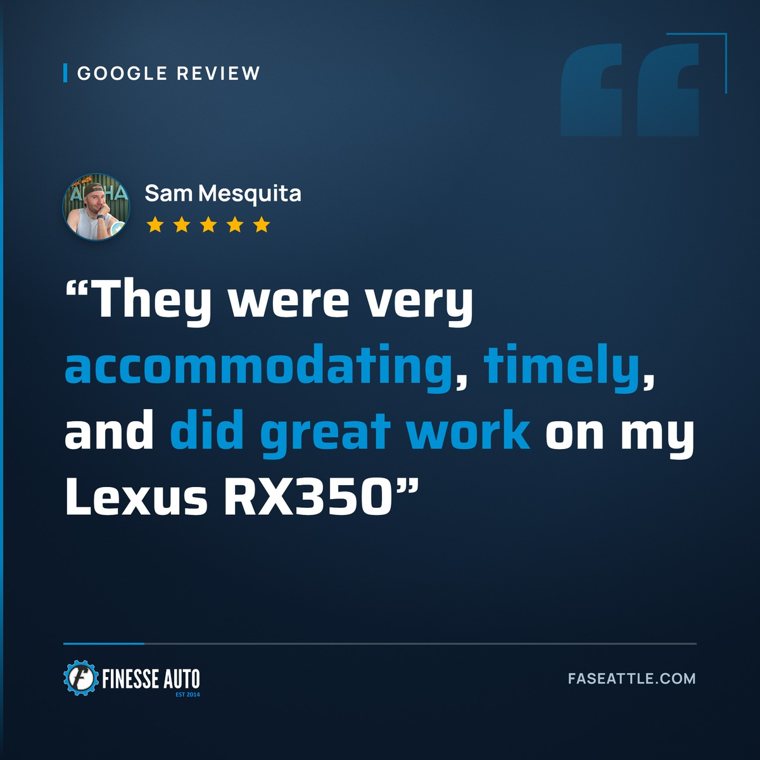
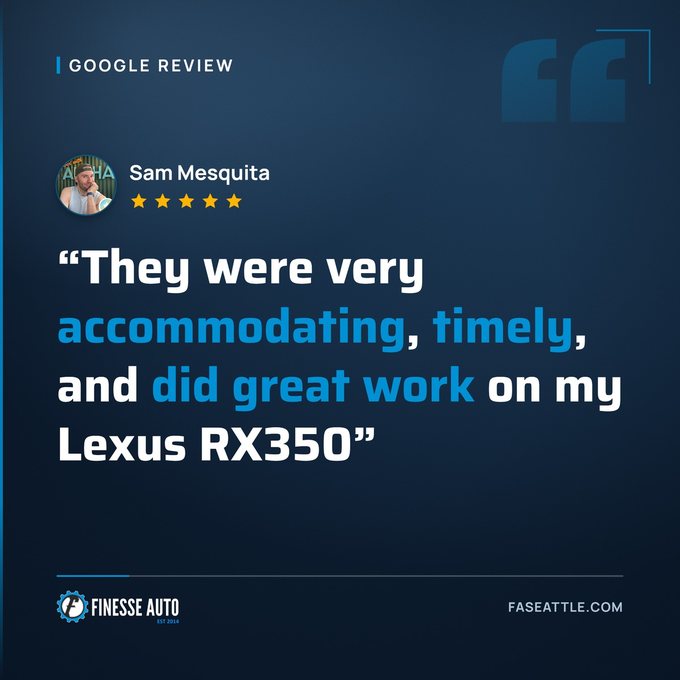
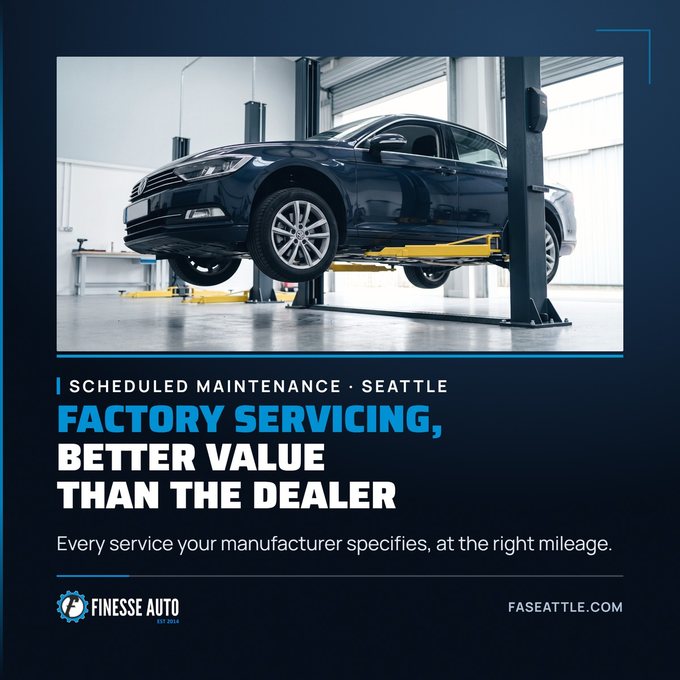
Every post uses a different photo. We never publish the same image twice on a profile.
The chat button on the board reaches the person who designs and schedules the posts, not a support queue or an account manager who has to pass it on.
Any scheduled post can be sent back for a change from the board itself. No email thread, no waiting on a reply to know it was received.
Replying to reviews is part of the service, not an extra. We write and post the replies, in the shop's voice, within Google's rules. That includes the negative ones, which is where most shops either go silent or say something they regret.
Google states that replying to reviews shows customers you value their feedback. It is also the part of a profile a wavering customer reads most closely, because they want to know what happens when something goes wrong.
We screenshot your full profile performance on day one, before we touch anything. Without that baseline there is no honest way to tell you later whether the work did anything.
Re-captured at 30, 60 and 90 days, on the same window, side by side with day zero.